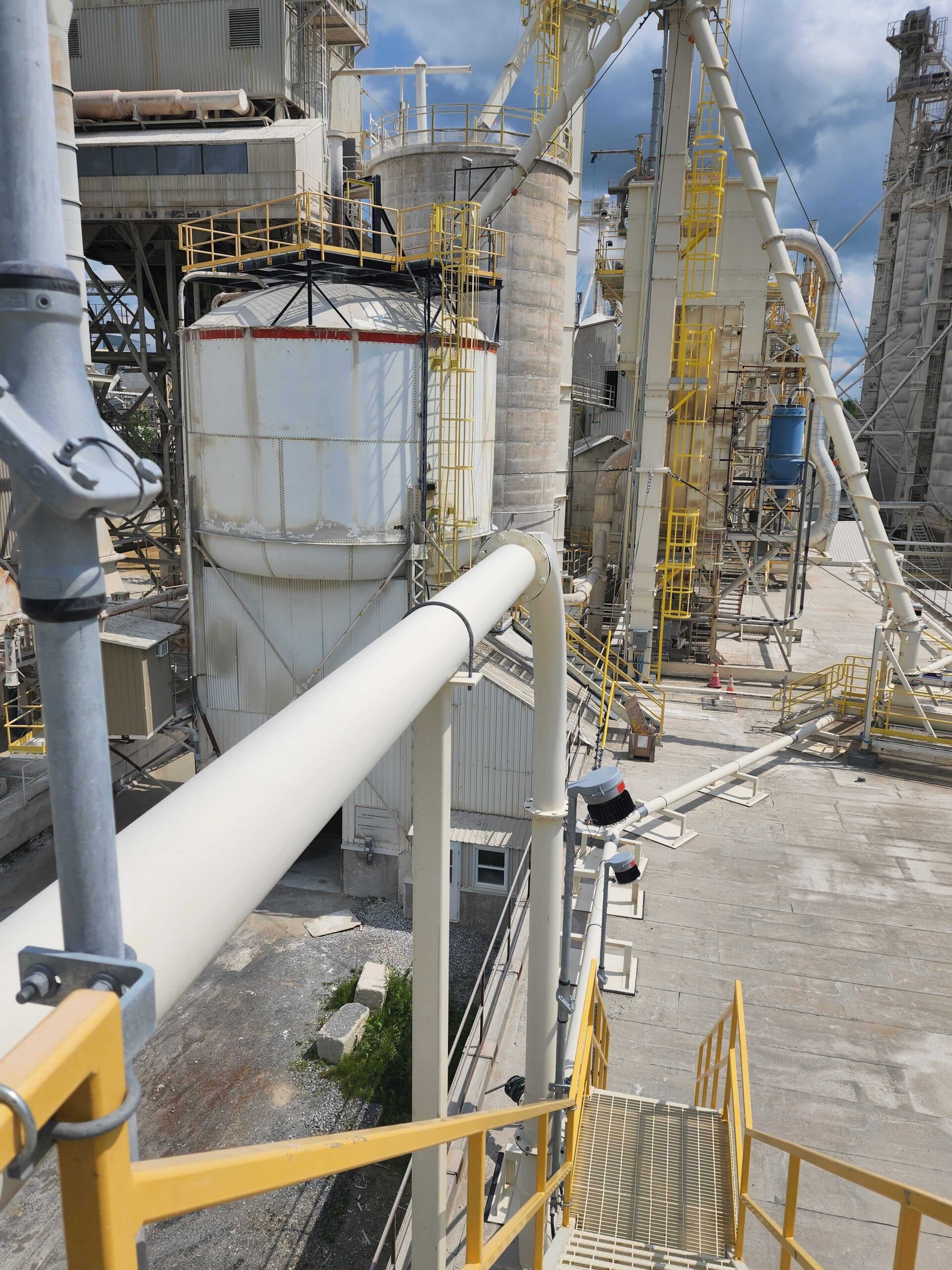
Our specialty is undoubtedly the pneumatic handling of dry bulk products. Since 1990, CON-V-AIR has worked in a multitude of applications, the most common being the pneumatic handling of various chemicals and minerals. We also process the pneumatic transfer of almost all food products (sugar, milk powder, flour, sesame seeds, spices, etc.), many chemicals (silica, borax, calcium carbonate, urea, carbon black, zinc stearate, etc.), pharmaceuticals, and even explosive products. Our varied experience allows us to appreciate the different products used by our customers and adapt our systems to the specific needs coming from their respective areas of activity.
Our systems have all types of air moving equipment to minimize the costs associated with the purchase of blowers and reduce the energy needed to operate the pneumatic transfer system. Moreover, we favour large diameter pipes that allow systems to operate at a lower pressure and gives the capability to increase the capacity in the event that the requirements of the process should change. This gives our customers a heavy-duty system that will still perform when the plant condition changes. We are known for the manufacturing of heavy-duty systems.
Dilute phase (pressure)
Pneumatic conveying systems in dilute phase (pressure) consist of the following:
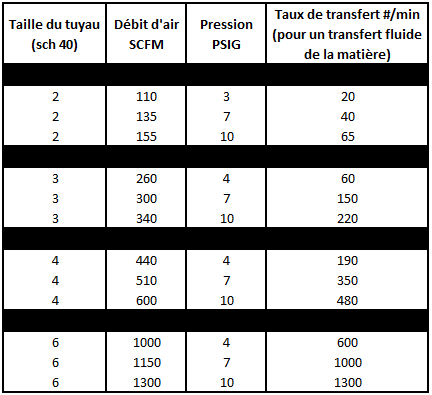
Diluted in stage systems are adapted to transfer less than 10 kilograms per kilogram of powder conveying air. Typically, our pneumatic conveying systems in dilute phases are designed to transfer approximately 6 kilograms of product per kilogram of dry bulk conveying air. The diameter of the pneumatic conveying line is adjusted to this concentration ratio of powder / air and the pressure drop that will be generated by the operation of the system. If the loss calculated load is too large, we increase the diameter of the transfer line. The typical pressure of a dilute phase conveying system fed by a rotary valve will be of the order of 6 to 10 psi. When feeding from an eductor, the typical pressure will be less than 5 psi.
Consequently, pneumatic transfer systems in dilute phase (also known in English lean phase) are always designed to operate at operating pressures below 15 psi. This point is the limit beyond which the regulation applies with regards to pressure vessels. To make a pneumatic transfer beyond this pressure, additional measures are required (certified welders, complex engineering, manufacturing more expensive).
In most applications of pneumatic handling in dilute phase, the product is fed continuously to the pipe. The most frequently used is the feeder rotary valve. Care must be taken for optimal operation of rotary valves. In particular: